I posted this photograph on Bluesky a couple of days ago. I almost didn’t take it.
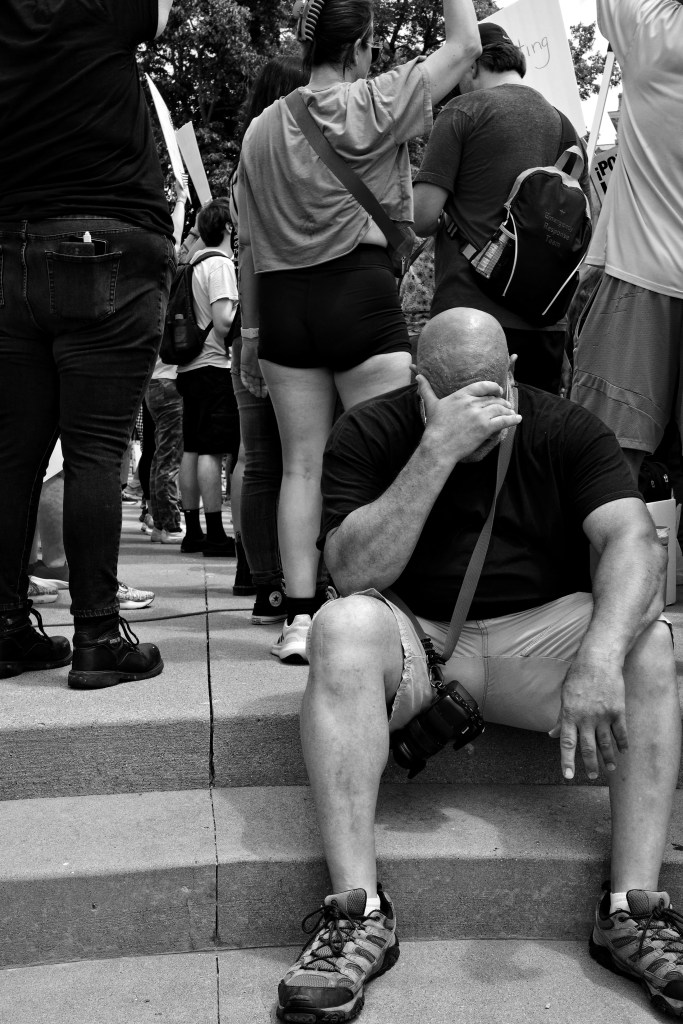
I was noodling around the edges of a demonstration and saw this guy, overcome with emotion (and maybe the heat), turn away and sit down. He was a big guy, bald, looked strong; not gym-strong, but work-strong. The anguish on his face was hard to look at but strangely beautiful. It was probably a moment he’d rather not have in public…but he did.
Okay, let me just get this out of the way: in the US you have no right to privacy when you’re in a public space. That’s the law. If you’re in public, other people have the right to take your photograph. The question is never whether it’s legal to take another person’s photo; the question is always whether it’s ethical or appropriate. Those are individual decisions and only the photographer gets to make them.
I wanted to take that guy’s photo. But I didn’t. It seemed too private, too personal. Then he put his hand up and covered his face. The depth of his emotion was still clear from his body language, but by covering his face the image became less about him as a person and more about the emotion itself. So I took one shot and moved on.
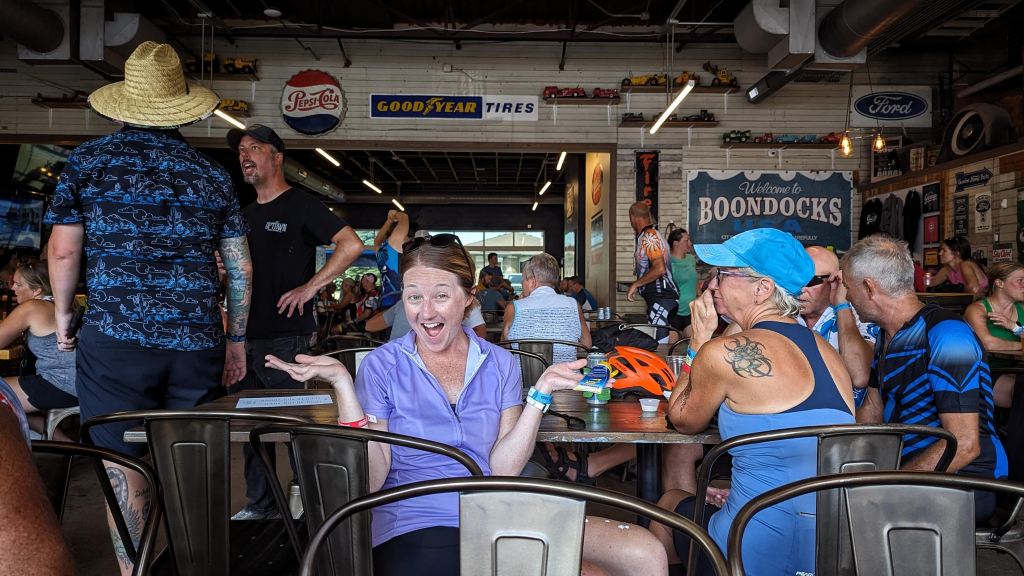
I don’t shoot a lot of photographs of people. When I do, it’s most often during a public event. A farmer’s market, a street fair, a protest march, a sporting event, that sort of thing. Sometimes I’ll shoot people in more generic public venues–at a fruit stand, in a pub, on a bicycle ride. I may or may not ask permission to take their photo; it depends on the situation and the moment. I’m very open about carrying my camera in circumstances like this; I’m not trying to conceal what I’m doing, but at the same time I don’t try to draw attention to myself.
Occasionally I’ll see somebody who, for one reason or another, interests me and I’ll stop them and ask if I can take their photo. Occasionally, they’ll say no; sometimes because they’re in a hurry, sometimes because they’re shy, sometimes for reasons they don’t articulate. If they say no, I just thank them and go on my way.
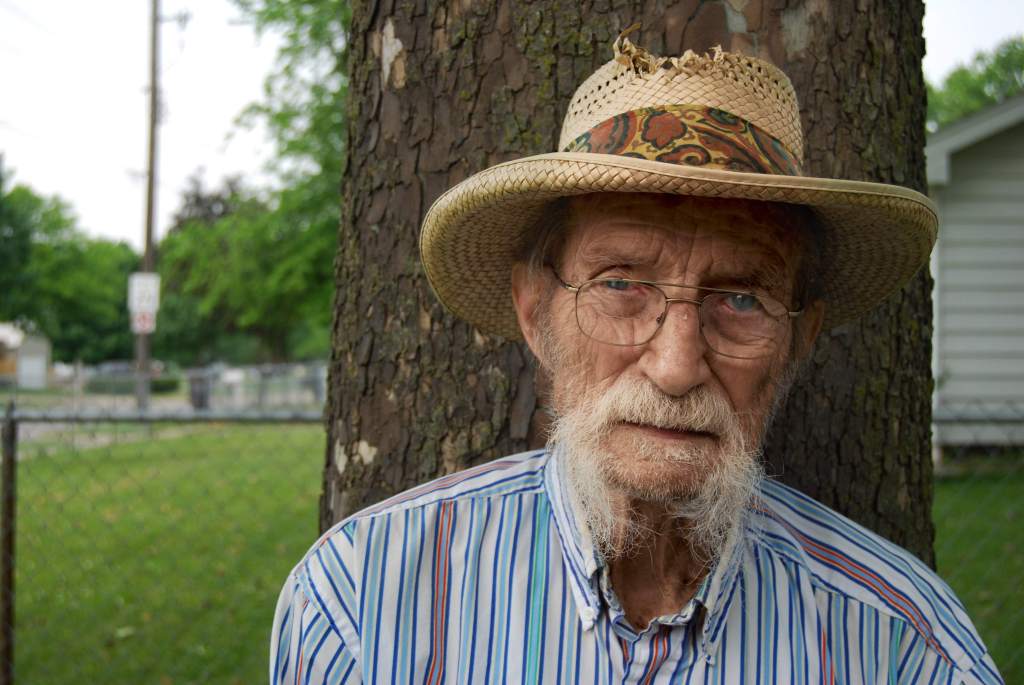
But most people say yes. Like this guy, John, who was waiting for a bus. Most people are friendly. They may ask, “Why do you want to take my picture?” and if they do, I tell them. I told John I liked his mustache and his hat. I don’t always ask their name, but I always thank them and show them the photo. Nobody has ever asked me to delete their photo.
I DO NOT take photos of marginalized people in states of distress. I confess, I’m occasionally tempted to shoot those sorts of photos. Suffering is part of the human condition, after all, and I think if it’s done with compassion, such photos can have merit. But they can also just be cheap exploitation. And frankly, the viewer can’t know the photographer’s purpose by looking at the photo. The photo is what it is.
Having just said that I don’t take photos of folks experiencing hardship, I’m now going to admit I actually DID take one a couple of weeks ago. I was walking down a city street and came across a man who was stumbling along, leaning against a containment wall of a landscaped office building. As I got closer it became clear he was extremely intoxicated. I asked him if he was okay. He kind of wobbled his head; I couldn’t tell if he was shaking his head ‘no’ or if he was nodding. He said, “I just need to lay down for a bit, I just need to rest, to sleep.” He said that two or three times.
And he did just that. He climbed up on the containment wall, laid his head on his arm, and closed his eyes. I don’t know if he went to sleep or if he just passed out. I stood there for a very long moment, uncomfortable about leaving him and equally uncomfortable about staying with him. The look of misery and exhaustion never left his face. But there was something almost delicate about his relaxed hands.
I very much wanted to photograph him. And I was ashamed of wanting that. In the end, after a minute or so, I took the photo and left. Was it an ethical violation of his privacy in moment of vulnerability? Yes, without a doubt. But I did it anyway.
It’s a good photograph. Not a great one, but good. t’s an honest one. I like it and I hate it. I haven’t shown it to anybody. I discussed the entire incident with my partner and told her about the photo; she was rightly troubled by my behavior. So am I.
But I can’t entirely regret it.
 gregfallis.com
Hi Greg, I have an issue logging in to WordPress, so I’ll just reply here. Love this blog post. Because of all the things you said here, I will never take photos of people on the street in states of distress. It feels cheap and I come away feeling like a thief, so I just won’t do it. I can, however, relate to the objective artist / director’s view when you see a potential “good” image from the situation and might be sorely tempted to make that image. So it’s a never-ending ethical debate for us. Love your portrait of John!Been thinking about you lately. I want to find a way to visit in the near future. It’s been so long.Also, ask Lynnie about your “doppelganger” she found. If you want I’ll send it to you. Eerie and hilarious. Love,J
LikeLiked by 1 person
Jody, I’ve long suspected I have a doppelganger. I mean, surely I can’t have done ALL the things I’ve been accused of. I’d love to have you visit.
LikeLike
In situations like that of your first photograph the impulse is to interpret what another person (the subject) is feeling/experiencing. And in making – then displaying – the photograph we are inviting an audience to interpret the experience of the subject also, hopefully in the same way that we (the photographer) do. But that interpretation is not always accurate or true. Humans are generally not good at recognising subtleties of body language or facial expression. This is why, like you, if I photograph people in public it is usually with distance or lack of focus. I too have been attracted by certain situations and people. Other people are amazingly interesting to people like us. It is such a paradox, that we have a powerful tool to steal people’s souls, and yet the stolen images may be clear visually but not at all clear in representation or meaning. Text and/or curatorial contextualisation then becomes very important.
In your image, I can see that the guy is wearing a camera which complicates the image. Photographer takes photograph of distressed photographer, both are overcome with feeling. Metaphorical self-portrait?
LikeLike
Photographer takes photograph of distressed photographer, both are overcome with feeling.
For better or worse, I’m a rather cold observer. I’ve had a number of careers that depended on me repressing immediate emotions in order to do the job. The emotions come later, when the job is done. It’s not a healthy approach, but there it is–the work (and that includes making immediate ethical decisions, which are sometimes wrong) comes first.
LikeLike
You’re a student and observer of the human condition. You’re a documentarian. Most of all you’re respectful. I don’t think you should be troubled by the photo you took. You documented. It’s better than what most people do – put their head down, look at their phone harder, and walk away faster.
LikeLiked by 2 people
Mark, I always respect your take on these things. That said, I do think I should be troubled by photographing the guy who passed out. But I also think there’s value in sometimes doing things that trouble you. It clarifies boundaries.
There are photographers who wouldn’t take the guy’s photo; photographers who’d take the photo and not feel bad about it, photographers who’d take the photo AND display it without feeling bad, photographers who’d take the photo AND display it while feeling bad about it, and photographers like me who’d take the photo, feel bad about it, and never display it.
It’s good to know where your boundaries are, even if those boundaries are porous.
LikeLiked by 2 people
There’s a fine, wavy line through all of this. It seems you walk that line with empathy and respect. That is the important thing.
LikeLiked by 1 person
Thank you. That’s what I try to do. It ain’t always easy. One of the things I loved/hated about being a PI was that I had to make big ethical decisions on the fly almost every week. Most folks will go through life without ever having to make a big ethical decision.
LikeLike