
Okay, first you have to understand that I’m a criminal defense guy. I spent several years as a private investigator specializing in criminal defense. Prior to that, I’d been a counselor in the Psych/Security unit of a prison for women; a significant proportion of the inmates there didn’t need (or deserve) incarceration. I’ve also taught courses in criminology and policing at American University in DC and at Fordham in NYC. I have a solid understanding of how the criminal justice system works. Or fails to work.
Second, you need to understand that I am completely opposed to the death penalty for any crime. I can present lots of arguments against capital punishment, but to spare you that, let me simply say this: the State should not be in the business of killing its own citizens. That’s it, end of argument for me.
I’m telling you this up front so you’ll understand my position when I see a social media post that makes this claim:
[W]e killed an innocent man in Missouri last week; his name was Marcellus Williams.
Criminal trials are about evidence–testimony and forensic evidence. Can the State present enough evidence to convince a jury beyond a reasonable doubt that the defendant committed the crime of which they are accused? At best, it’s an imperfect system. Sometimes factually guilty people will go free, sometimes factually innocent people will get convicted. That’s an indisputable fact (and also a solid argument against the death penalty).
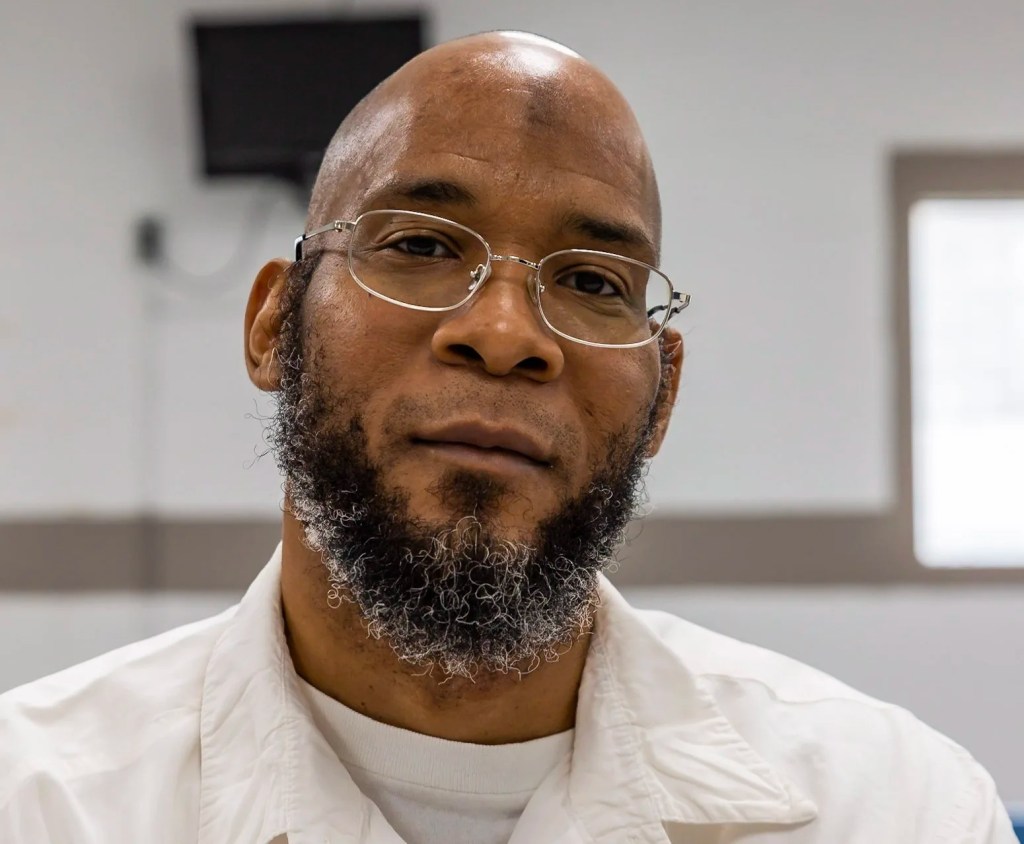
A lot of people are making the claim that Marcellus Williams was innocent. Was he? Despite those claims, we don’t really know (another argument against the death penalty). What DO we know? We DO know the following:
- Felicia Gayle was murdered. She was stabbed 43 times with a knife taken from her kitchen.
- Her purse, jacket, and a laptop computer belonging to her husband were missing at the crime scene, presumably stolen by her murderer.
- Henry Cole, a convicted criminal, testified that Williams admitted killing Gayle while they were both in jail for crimes unconnected to the murder. His testimony conformed to published public reports of the crime and contained no new information. He did NOT come forward until after a reward for information was offered (he accepted the reward: US$5000). Although there’s no overt connection to this case, when Cole violated his parole the State chose NOT to revoke his parole. It’s possible this may have been influenced by his decision to testify against Williams.
- Laura Asaro, Williams’ girlfriend at the time of Gayle’s murder, testified Williams admitted to her that he’d killed Gayle. She also said she saw a laptop in Williams’ car and found a purse that contained Gayle’s ID. In addition, she testified that she saw scratches on Williams’ neck, blood on his shirt. Although she did NOT accept any reward money, a neighbor said Asaro claimed she was getting paid to testify. No flesh was found under the fingernails of the victim, making her testimony about scratches moot. Asaro, who’d been arrested for solicitation (prostitution), lied about that arrest during deposition. No bloody shirt was found during a later search, nor was Gayle’s purse recovered.
- A warranted search of Williams’ car produced a calculator belonging to Gayle and a ruler with the logo of Gayle’s employer.
- The laptop taken from Gayle’s home was recovered from a witness who claimed he’d bought it from Williams.
- There was no physical forensic evidence tying Williams directly to the scene of the murder. No fingerprints that matched Williams; none of his shoes that were tested matched the bloody footprints found at the scene; DNA taken from the murder weapon did not match Williams. Police suggest Williams may have worn gloves and could easily have disposed of a bloody shirt, shoes, and Gayle’s purse.
- All capital cases are tried before death-qualified juries. Potential jurors who are categorically opposed to the death penalty are automatically disqualified. Research strongly suggests death-qualified juries are more likely to vote for convictions.
- Williams was convicted of first-degree murder and sentenced to death.
The Innocence Project (a group I respect) made much of the fact that the State offered no motive for Williams to have murdered Gayle. Despite what you see on television, motive is rarely a major factor in a criminal investigation. The fact is, people do stuff all the time without being able to explain why they did it. That’s even more true of people with drug issues or problems with impulse control. The absence of an obvious motive doesn’t mean much when it comes to criminality.
Back to Williams. Was he innocent? There was evidence that he was involved in the murder, but that evidence is largely circumstantial. There was testimony that he’d confessed, but the veracity of testimony given by a fellow inmate who sought a reward and an ex-girlfriend is questionable. Williams offered no explanation for why he had the victim’s calculator and ruler in his vehicle, or why another witness testified he’d sold the victim’s laptop. The evidence presented to the death-qualified jury was enough to convince them of his guilt.
So, was Williams innocent? Maybe. Maybe not. We don’t know. I’m inclined to think he was probably guilty. But in the end, I really don’t care.
His guilt or innocence doesn’t matter to me in terms of his death sentence. Even if he murdered Gayle, I don’t believe the State should have the power or authority to kill its own citizens. I also believe that when we base our opposition to the death penalty on the innocence of the accused, we’re tacitly agreeing with the argument that it’s okay to execute the guilty.
The State should not have executed Marcellus Williams, regardless of his guilt or innocence.
 gregfallis.com
I’m so glad we got rid of the barbaric practice in the 1960’s. Humans are inherently unreliable when they think they can play God.
LikeLiked by 1 person