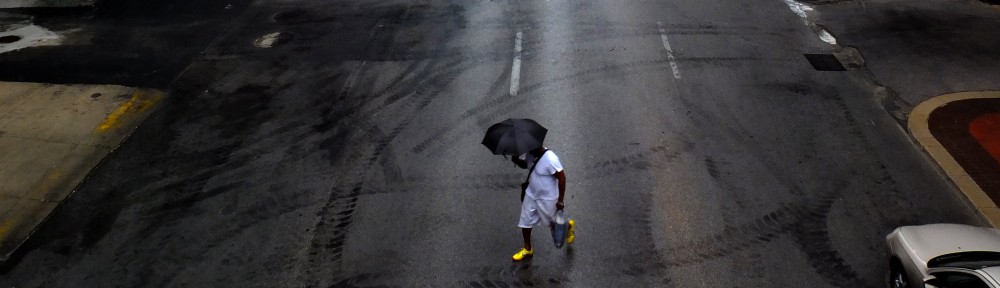
Back in May of 2024 I reluctantly began to occasionally look at my old photographs, because apparently that’s a thing. I’d never stopped shooting photos, but I’d stopped thinking about the praxis of photography–the many ways in which photography can be put into practice. Then I came across an article somewhere that suggested looking at your old photos as if they were made by a different person and seeing what you could learn from them.
I gave some thought to that idea and decided it was silly. But I did it anyway. And hey, whaddya know? It had some value. Maybe not the intended value (which was something to do with improving your photography maybe?), but value all the same. If nothing else, looking at a few old photographs has reminded me that I tend to be pretty deliberate when it comes to composition.
This is the seventh time I’ve looked at an old photo. And you’ll notice the composition is unusual. I’ll explain why in a moment. First, the photograph.

Yeah, you’re probably wondering what the hell, right? Allow me to ‘splain. A photography group I used to belong to (well, okay, a group I used to run) would engage in a variety of photo projects. This particular project involved shooting photographs as an homage to photographers we admired or respected. The idea was that by emulating these photographers, we could learn something about them and their approach to photography.
I chose to emulate the work of Uta Barth, a photographer I’d written about several years earlier. Barth is a conceptual fine arts photographer; her most important work is about the act of seeing rather than what is seen. She essentially decided to remove the subject of the photograph from the photograph. By focusing on where the subject would be and by overtly calling the viewer’s attention to the absence of the subject, she attempted to turn the viewer into the subject. When the viewer is the subject, the photograph is no longer about what is in the photograph; it’s about the act of looking at the photograph. Many critics of her early photographs complained that her images were blurry and out of focus. Barth explained the photos were “perfectly in focus, the camera just happens to be focused on an unoccupied point in space.”
I confess, at first this approach didn’t make a lot of sense to me. It was until I realized Barth was basically saying the world and everything in it exists independent of us and independent of anything to do with us. She was saying the world is NOT just our background. That concept hit me hard, partly because it should be so obvious.
The particular photo was my first attempt to emulate Barth, and it’s a failure as an homage. Why? Because, unconsciously, I included a subject. Barth very deliberately cleared away any sign of herself in her work. The inclusion of any personal item makes the photograph about the photographer. “Shoes on the floor, clothes, letters and objects on my desk immediately construct a narrative and identity of the person, and there you have it: I’m the subject.“
And hey, there’s me…the two single-use plastic bottles of water (it was 2013; I didn’t know any better back then) and an item of clothing slung over a screen divider. It doesn’t say much about me, but it suggests something—and that’s enough to create a subject of the photograph.
I guess there’s a lesson there. If you’re going to attempt conceptual photography, make sure you have a solid grasp on the concept. And I suppose this demonstrates the value of looking at your old photographs. If nothing else, they remind you of lessons learned.
 gregfallis.com
I remember this project like it was yesterday! and yet it was 2007. I loved our “emulation” projects; they were truly enlightening.
LikeLike